
Nitrate in Haryana’s groundwater worse than Punjab’s; cheap urea under scanner
 Aayush Goel
Published
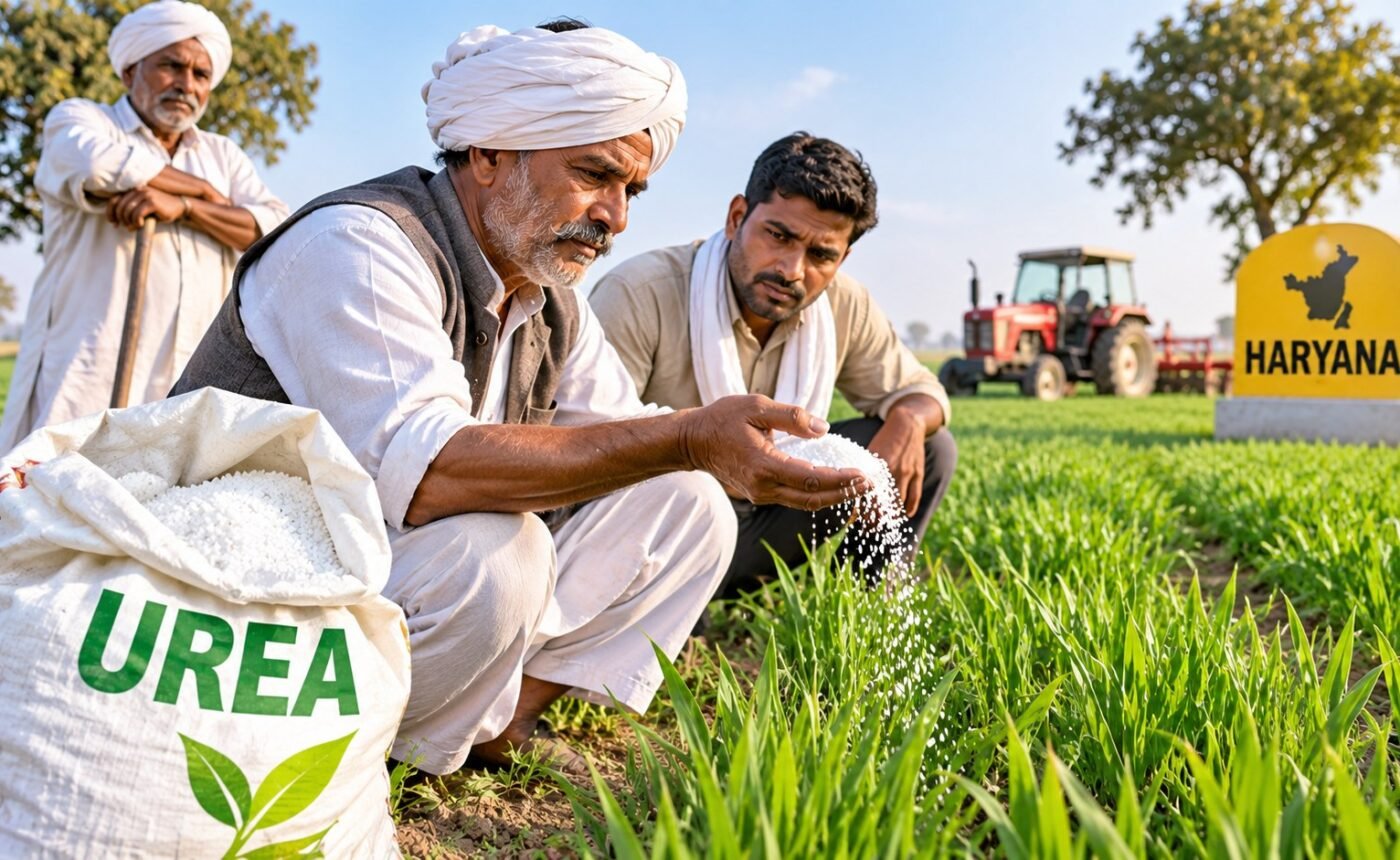
Chandigarh. Nearly one in seven groundwater samples tested in Haryana failed the safe drinking limit for nitrate, a worse record than Punjab’s. A study released on Monday now counts damaged water and soil among the hidden costs of India’s cheap urea.
The Central Ground Water Board’s 2024 water quality report found nitrate above the limit in 14.56 per cent of Haryana’s samples, against 12.58 per cent in Punjab. Haryana was also among the states where nitrate levels rose between 2017 and 2023. The board says nitrate is a particular worry in farm areas that use a lot of nitrogen fertiliser and animal waste.
The new paper, “The Economics of Cultivation” by Delhi-based research group Climate Trends, also notes nitrate above the safe limit in Haryana’s groundwater. It names Haryana and Punjab as India’s two most nitrogen-dependent states. Haryana farmers use 20 kg of nitrogen for every kg of potash, close behind Punjab’s 21 kg and four times the national average of 5 kg.
Overuse has not made the soil richer. Across India, 97 per cent of soil samples are short of nitrogen and 85 per cent short of organic carbon. Each kg of fertiliser that produced 13.4 kg of grain in 1970 produced only 2.7 kg by 2015.
Price, not farmers, to blame
The study says the fault lies with a decade-old pricing rule that keeps nitrogen artificially cheap. Farmers respond to that price. The nation picks up the bill: a subsidy that moves with global gas prices, plus damage to soil and water.
When researchers counted those costs for wheat, the benefit to the country was 36 to 182 per cent lower than what the farmer earned. In two of five cases, the country made a loss.
“The hidden costs, in terms of soil degradation, declining soil health, environmental damage, energy dependence and the growing fiscal burden on the exchequer, are increasingly difficult to ignore,” said lead author Dr Palak Balyan.
States that farm this hard also face bigger swings. In Punjab, the one state whose bill the study breaks down, the subsidy cost per hectare more than doubled to ₹14,072 when global prices spiked in 2022-23.
Gulf crisis exposed the risk
The Strait of Hormuz handles about a third of the world’s fertiliser trade by sea. Its effective closure in February sent urea prices up 53.7 per cent in a single month. Indian fertiliser plants got only 60 to 70 per cent of their normal gas, and urea output dropped by 0.8 million tonnes in March. The government bore the entire cost of filling the gap.
“India’s fertiliser challenge is as much an energy security issue as it is an agricultural one,” said Shreya Jai, Energy Lead at Climate Trends.
Aarti Khosla, the group’s Founder-Director, urged careful use and a gradual move to bio-based inputs, “rather than seeking to eliminate fertilizer use altogether”.
Less chemical, more profit
At an ICAR-IIFSR trial in Modipuram, plots where organic inputs replaced 50 to 75 per cent of chemicals grew as much as fully organic plots. They also earned ₹53,200 more per hectare than all-chemical ones.
Organic crops fetch higher prices, and global evidence shows such farms make 22 to 35 per cent more profit despite smaller harvests. The hitch is the wait. Costs begin at once, while the better price follows only after two to three years of certification.
How fast a state moves matters too. Farms under Andhra Pradesh’s natural farming programme earn over twice the profit of chemical farms at similar yields. Sikkim spent little on training, and most of its farmers lost yield. Sri Lanka’s overnight ban in 2021 is the warning.
What needs to change
The study argues that paying farmers per hectare to use fewer chemicals would cost less than the damage the subsidy now causes. Each million hectares of rice shifted this way would save ₹1,155 crore a year.
It recommends:
– subsidising urea by nutrient, not by bag
– linking part of the subsidy to Soil Health Card advice
– a fixed base year for PM-PRANAM, the scheme that rewards states for using less chemical fertiliser
– one department for fertiliser pricing and soil health
“This transition cannot be left entirely to farmers to navigate on their own,” Balyan said.

Comments