
Rabi MSP hike: Haryana farmers stand to gain up to ₹720 crore as mustard price rises 6.7%
 Aayush Goel
Published
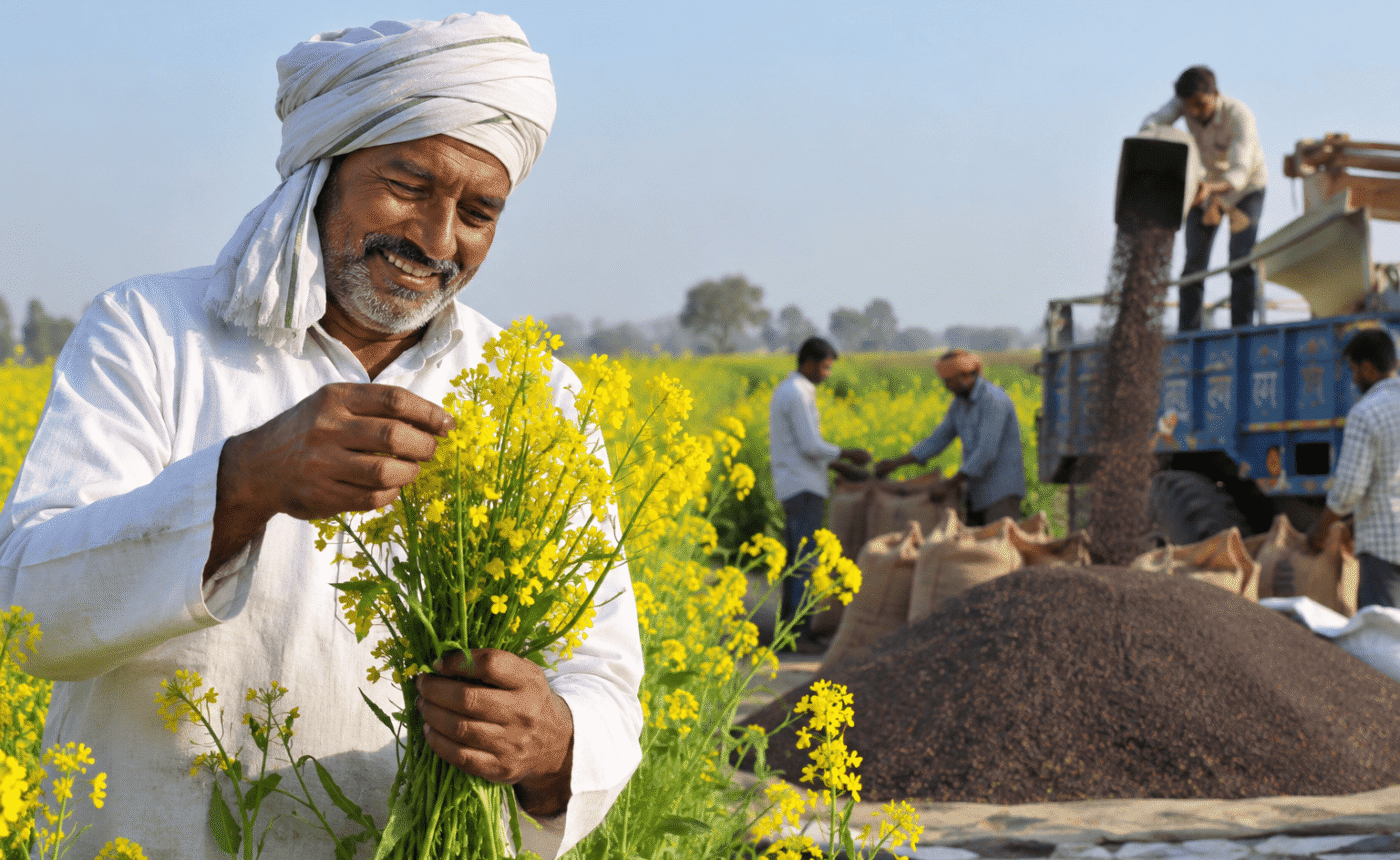
CHANDIGARH. Haryana farmers could receive up to ₹720 crore in additional MSP payments from the Centre’s latest increase in rabi crop prices, with mustard emerging as the biggest beneficiary of the hike among the state’s key procurement crops.
The mustard MSP has been raised by ₹413 per quintal, or 6.7%, from ₹6,200 to ₹6,613 for the 2027-28 marketing season. Wheat, Haryana’s main procurement crop, gets a smaller increase of ₹25 per quintal, or about 1%, taking its MSP from ₹2,585 to ₹2,610.
The percentage increase puts the mustard hike in sharper perspective. While wheat accounts for far greater procurement in Haryana, the price increase for mustard is more than 16 times higher in rupee terms.
At an assumed procurement of eight lakh tonnes of mustard, the revised MSP would translate into roughly ₹330 crore in additional payments to Haryana farmers. If procurement reaches the state’s planned 13 lakh tonnes, the additional payment from mustard could rise to about ₹537 crore.
For wheat, procurement of 72 lakh tonnes at the revised MSP would mean an estimated ₹180 crore more for farmers. On the current procurement assumptions, the two crops together account for about ₹515 crore in additional MSP payments.
Mustard gives Haryana the bigger price benefit
The higher mustard MSP is particularly significant for the state’s mustard-growing belt, including Sirsa, Bhiwani, Mahendragarh and Charkhi Dadri.
Haryana procured 74.95 lakh tonnes of wheat in RMS 2025-26, while mustard procurement was 7.74 lakh tonnes. The state’s planned 13-lakh-tonne mustard procurement would therefore represent a substantial increase over the recent procurement level.
Safflower has received the largest percentage increase at 10.3%, followed by mustard, barley and masur. The stronger increases for oilseeds and pulses also support the broader policy push towards crop diversification.
For Haryana farmers, the size of the final benefit will depend on actual procurement. The ₹720-crore figure represents the higher-benefit scenario based on 13 lakh tonnes of mustard procurement, while the current procurement assumptions put the estimated additional payment at around ₹515 crore.
The Centre’s decision therefore has two distinct implications for Haryana: wheat continues to provide the bulk of procurement, but mustard gets the much stronger price increase and could deliver the larger incremental benefit per tonne.

Comments